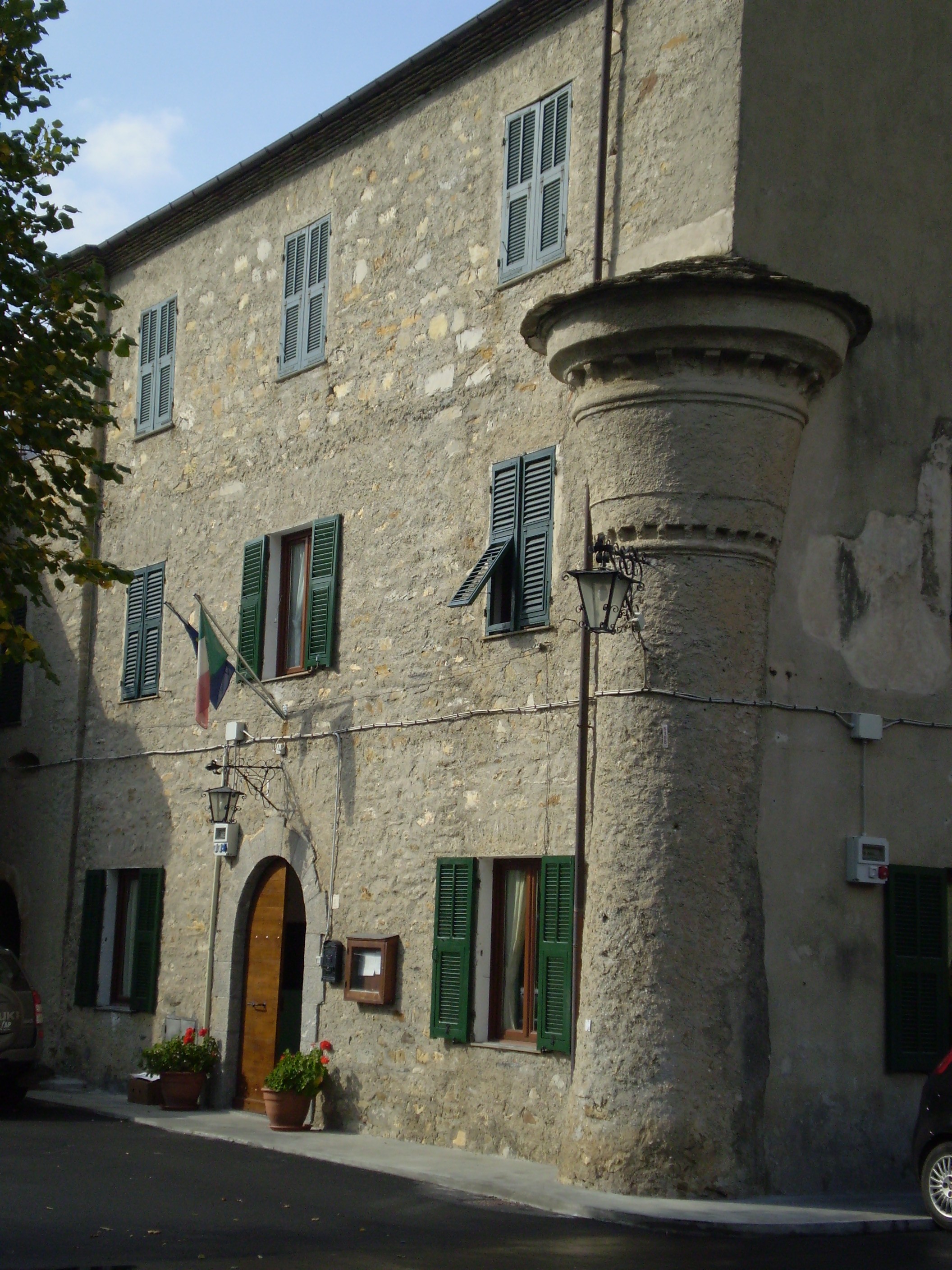
Castello di Pornassio
Risalente al XV secolo ma con origini precedenti, conserva un cortile interno con volte a botte, una cappella con tracce di affreschi e quattro guardiole semicircolari.
Liguria · Alta Valle Arroscia · 630–934 m
Cinque forti ottocenteschi su un valico conteso per secoli, un vino rosso imposto per editto nel 1303, sei frazioni di pietra e nove sentieri segnati.
Photo: F. Ceragioli · CC BY-SA 3.0
Not to be missed
The places that best tell the story of this corner of alpine Liguria.
Risalente al XV secolo ma con origini precedenti, conserva un cortile interno con volte a botte, una cappella con tracce di affreschi e quattro guardiole semicircolari.
Built between 1880 and 1888 to bar the French route towards Piedmont, the entrenched camp of Nava is an imposing Savoy defensive system made of five forts: Centrale, Richermo, Pozzanghi, Bellarasco and Montescio. It has been a protected national heritage site since 1994.
The largest and best preserved of the five forts of the Nava entrenched camp, built between 1880 and 1888 right on the summit of the pass. Today it can be visited and houses the Pro Loco tourist information office, a small geological museum and, in summer, exhibitions and events in its vaulted halls.
At 934 m, the pass that has always linked Liguria to Piedmont: a strategic gateway contested for centuries, today also known for the lavender that colours the meadows around the forts in June.
Un percorso tra i caruggi con oltre trenta installazioni permanenti che ricreano scene di vita e mestieri di inizio Novecento, utilizzando oggetti originali: dalla lavorazione della liscivia ai tessuti, dall'antico forno alle macchine per il grano e al frantoio.
Considerate tra le più spettacolari della Liguria, si trovano a circa 1050m e compiono una serie di salti per un dislivello di oltre 20 metri.
Il campo trincerato
Costruiti fra il 1880 e il 1888 per sbarrare ai francesi la strada verso il Piemonte. Oggi il Forte Centrale si visita, ospita l'ufficio turistico e, d'estate, mostre fra le sale voltate.
Scopri il Forte CentraleOn foot
From the 35-minute stroll to St Lucy's chapel to the 15 km great loop of Ponti.
The easiest of the official routes: almost flat, it starts from the Colle di Nava car park and can also be driven. Ideal for a first look at the pass and its forts.
Demanding and panoramic, it crosses the heart of the entrenched camp: Forte Bellarasco, the San Lorenzo batteries and Forte Richermo, up to a maximum of 1,221 m at Monte Ariolo.
A medium-difficulty loop, partly drivable, reaching the 1,243 m Passo di Prale.
At the table
Ormeasco DOC wine, mountain olive oil, lavender honey and the fruits of the woods.
The wine that bears the village's name: ruby red, fragrant and well structured. It comes from the Ormeasco grape, whose cultivation was imposed in 1303 by an edict of the Marquises of Clavesana, and carries the DOC designation. Production is limited to about 500 hectolitres a year.
A natural rose obtained by white vinification of Ormeasco grapes: fresh, delicate and very pleasant on the palate.
A mountain oil made from Taggiasca olives using traditional extraction methods. The environmental conditions of the upper valley make pesticides unnecessary, so it is naturally organic.
Produced in small quantities by local beekeepers, it takes its character from the aromatic flowers of the valley: lavender, lime, chestnut and mountain wildflowers.
Coming up
The most heartfelt celebration of the Nava hamlet: the gathering of the Alpine troops at the Cuneense Division memorial, where General Battisti's remains rest among others. Mass, parade and Alpine lunch among the forts of the pass.
The festival that accompanies the "In Herbis Salus" Herb Museum: aromatic and medicinal herbs, lavender distillation, guided tours of the open-air museum and the cartelami.
The traditional fair of the village of Ponti, the oldest settlement in the municipality. Stalls among the medieval portals, valley produce and a visit to the water mill and oil press complex.
The area
From Ponti at 392 m up to Colle di Nava at 934: the municipality spans a thousand metres of altitude.
The administrative centre of the municipality, home to the Town Hall and the main post office. It preserves the early-18th-century chapel of St Aloysius Gonzaga and the mid-16th-century chapel of St Anthony the Abbot.
Perched on a knoll overlooking the valley, Villa preserves its 13th-century castle and the parish church of San Dalmazzo. It is the heart of Ormeasco production, the ruby-red wine celebrated on the last Sunday of August.
The oldest and architecturally richest settlement in the municipality: medieval stone portals (one dated 1169), former artisan workshops and a still-working water system with oil mill, flour mill and sawmill. A 7th-century funerary urn was unearthed here around 1911. The San Bernardo Fair falls on the Sunday before 20 August.
An example of spontaneous rural architecture at 660 m. Here stand the 15th-century church of the Annunciation and the Baroque sanctuary of Madonna della Chiazza, frescoed in 1898.
A holiday resort on the pass linking Liguria and Piedmont. Five 19th-century forts, the Alpini memorial holding General Battisti's remains and a 15th-century Romanesque chapel. The Alpini Festival takes place on the first Sunday of July.
The most recent residential area, stretching along the SS28 road just below Colle di Nava. It is the starting point of hiking route G, the historical and monumental one.
Before you set out
Farmacia, carabinieri, guardia medica, uffici postali e informazioni turistiche: i recapiti del paese sempre disponibili, anche offline sull'app.